Scuba anyone?
-
This is a pretty good read
I have always had real trouble staying horizontal in the water, I have big calves (read small thighs!), and I tend to vertical whatever I do, so I am very keen to get the wings and move my weights from my waist to higher up my back, I am sure this will help a lot. I want to learn to frog kick, to conserve air, but need to be horizontal to to that.
Also as @Karol says, reducing your surface area as you move through the water is a great helper in reducing air consumption, wings present a way lower water resistance than a jacket style BCD
-
There's a 40+ page on Scubaboard. Asked Claude to summarize it:
ESTABLISHED FACTS
The victims: Five Italian nationals died on May 14, 2026, in Vaavu Atoll, Maldives, near Alimatha Island. They were Monica Montefalcone (associate professor of marine ecology, University of Genoa), her daughter Giorgia Sommacal (biomedical engineering student), Muriel Oddenino (research fellow), Federico Gualtieri (recent marine biology graduate), and Gianluca Benedetti (diving instructor and liveaboard operations manager).
The vessel: They were aboard the MY Duke of York, a luxury liveaboard. Roughly 25 Italian nationals were on board total; 20 others were safe. The Duke of York provides air and nitrox and supports rebreather divers.
The dive: The group entered the water in the morning and went to a cave system at approximately 50–62 meters depth. The cave has three large chambers connected by narrow passages. A distress call was received at 1:45 PM. Benedetti's body was recovered first (found near the mouth of the cave / in the second chamber, reports vary). The remaining four bodies were believed to be deeper inside.
A sixth diver — a female University of Genoa student — decided at the last moment not to enter the water. She is assisting the investigation.
A Maldivian guide was also on the dive and survived (surfaced separately).
The University of Genoa confirmed the researchers were in the Maldives for scientific fieldwork but stated this specific cave dive was "undertaken privately" and was not part of the official research mission.
The Italian tour operator (Albatros Top Boat) denied authorizing or knowing about the deep dive. Their lawyer stated Albatros only marketed the cruise, didn't own the vessel, and didn't employ the crew.
Recovery diver death: Maldivian MNDF Sgt-Major Mohamed Mahudhee died of decompression sickness on May 16 during recovery operations, bringing total deaths to six. He was buried with military honors.
Regulatory facts: Maldivian law limits recreational diving to 30 meters. Tech diving requires advance approval. A yellow weather alert was active in Vaavu Atoll on the day of the dive.
Recovery operations: Maldivian authorities suspended operations after Mahudhee's death. DAN Europe coordinated deployment of three Finnish cave/tech recovery divers (Sami Paakkarinen, Jenni Westerlund, Patrik Grönqvist), who arrived in the Maldives and planned their first dive for Monday, May 19. Italian tech specialists were also brought in. The Duke of York's operating license was suspended indefinitely.
Both Italy and the Maldives opened investigations.
THREAD CONSENSUS (broad agreement among posters)
The divers were massively under-equipped for the dive. Multiple sources (boat crew confirmation relayed via Facebook, Italian press) indicated single AL80 tanks on air. The guide reportedly brought one extra AL80 of nitrox for deco. The thread overwhelmingly agrees this is woefully inadequate for a 50–60m cave penetration. A proper dive at this profile would require doubles or sidemount, trimix (not air), redundant gas, a continuous guideline, three lights per diver, and full cave certification.
This was not a recreational dive gone wrong — it was a deliberate deep cave entry. Early speculation about downcurrents sweeping rec divers into a cave gave way to consensus that the group intentionally targeted this cave. The dive site is known locally.
Italian/CMAS dive culture played a role. Multiple posters noted that Italian (FIPSAS) and broader CMAS-tradition training historically normalized deep air diving (50–60m on air) in ways that PADI/SSI/GUE cultures do not. Several CMAS branches train to 50–60m on air with deco obligations as "recreational" diving. The thread broadly agrees this cultural norm likely influenced the group's risk assessment.
The depth and overhead environment on air made narcosis an extreme hazard. At 50–60m on air, nitrogen narcosis is severe. In an overhead environment with no direct access to the surface, narcosis-related impairment can cascade rapidly through a group.
The "cascade" or "domino" failure mode. Broad agreement that multi-fatality incidents usually involve one diver getting into trouble, then others dying attempting rescue — especially when everyone is impaired by narcosis and burning through limited gas at depth.
Certifications don't equal competence for this dive. Thread consensus is that while several of the divers were experienced (thousands of dives, instructor-level certs, scientific diving credentials), none of this is equivalent to proper cave diving and advanced trimix certification. Only three of five had any tech certification. Federico Gualtieri (23) held only Advanced Diver / Scientific Research Diver certs.
The recovery operation was botched initially. Strong agreement that the Maldivian military should not have risked lives (and lost one) rushing to recover bodies in an extremely dangerous cave without proper cave-recovery expertise, before the Finnish/Italian specialists arrived.
NOT CONSENSUS (actively debated or disputed)
Contaminated gas as a contributing cause. Some posters argued that five simultaneous deaths is statistically unusual even in a catastrophic cave scenario and suggested CO contamination of the fills could explain all five going down at once. Others pushed back, saying the equipment and profile alone are sufficient explanation and that contamination is pure speculation without evidence.
Siphon / Venturi effect pulling divers in. A widely shared Facebook post from a local guide with ~9,000 dives proposed that tidal currents could create a siphon effect pulling divers into the cave. This generated significant debate. A poster with a PhD in fluid dynamics argued the physics were being misapplied — a Venturi effect as described would push water out of the cave, not suck people in. Others countered that tidal flow direction depends on timing. No resolution.
Whether the dive was "planned" vs. "impromptu." Some posters (including a firsthand Facebook account from someone who'd dived with the group previously) insisted this was a planned science-related deep dive with special permissions. The university's denial, the tour operator's denial, and the apparent rec-level equipment strongly suggest otherwise. The husband of Prof. Montefalcone defended the group's experience and planning. Thread opinion is split between "they planned an ill-equipped bounce dive to see the cave mouth and got in over their heads" and "they deliberately intended a full cave penetration while knowing the risks."
Whether downcurrents played a role. Early in the thread, some speculated the divers might have been swept down to depth by Maldives-characteristic downcurrents. This is now a minority view given evidence they targeted the cave, but hasn't been completely ruled out as a contributing factor (e.g., currents inside the cave system complicating exit).
How much blame falls on the boat / guide / operator. Some posters argue the Duke of York crew and Maldivian guide should have prevented the dive or refused to support it. Others note the divers were experienced adults who made their own decisions, and the guide did survive (implying he may have turned back appropriately). The tour operator's liability is debated given their claim they only marketed the trip.
Whether ScubaBoard-style speculation is helpful or harmful. A recurring meta-debate: several experienced posters (including instructors and cave divers) argued the thread was generating irresponsible speculation from armchair divers. Others countered that analyzing incidents is how the community learns. One poster advocated for a standardized rubric for accident analysis rather than freeform speculation.
-
@JDelage thank you for summarising so I could deep dive into it (pun intended) right after work.
Interesting observation about CMAS culture. I am not certified with them, but I heard the stories of their “hardcore” culture. For me they are like a diving org pretending to be special ops / DEVGRU.
In this field I explore for fun they were the ultimate buzzkill. And now I see that all that hardness and rigour is more of a hubris… -
Yes, the Maldivian guide survived. The other guide didn't make it out, but he was found right outside the cave system - with a completely empty tank.
The update is that the bodies have been found in the 3rd cave by the team of Finnish cave diving specialist that was flown in by DAN. They will attempt recovery in the next couple days. Those guides use rebreathers & trimix, they know what they're doing. Dive lasted 4hrs apparently!
-
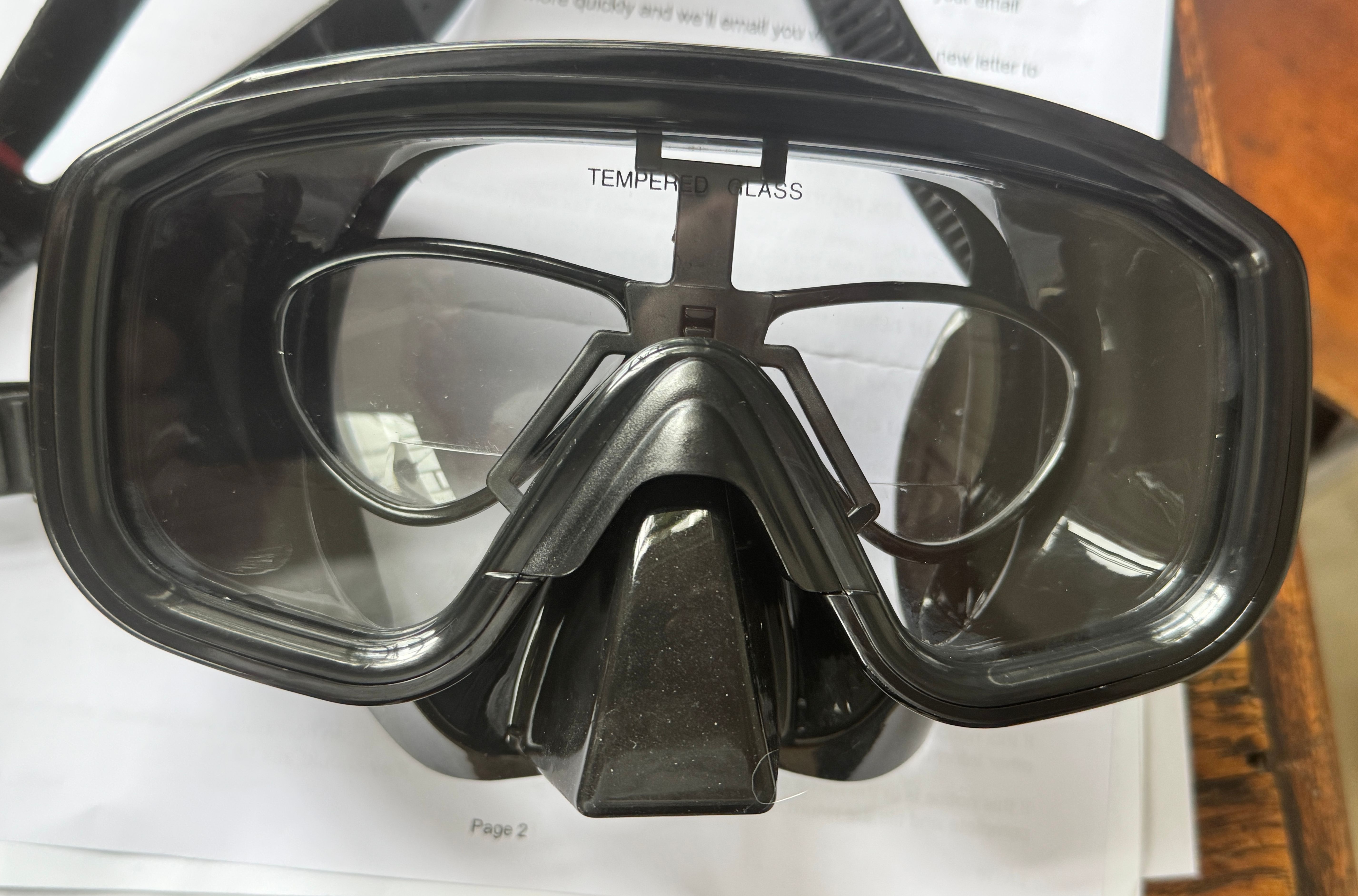
Getting old has some challenges....
At least, I may be able to see a few more macro critters on the next trip.....
-
-
I posted this on Scubaboard on June 11, but I figured tha might be useful here too:
Roatan Anthony's Key Resort (AKR) trip report
My son and I just spent a week diving in Roatan at AKR. I'm a long term diver; he got certified at AKR (he did the online portion beforehand). Here are my notes in no particular order (typing that in the Roatan airport):
- When you book, consider the diving schedule before you decide on your arrival day. Night dives are Tue and Thu. Shark dives are only Thu & Fri. We landed & departed on a Thu so we missed one of 2 night dives and all the shark dives.
- They organize & staff their boats by week; they moved me from one boat to another after the week end.
- We landed Thu Jun 4th. The resort was definitely not full then. On Sat, they had a very large influx of guests (I heard 90 people) and that changed the feel of the place a bit: more crowded dives / better post dive ambiance.
- As a whole, we found AKR a very well run operation. The staff is generally very helpful and friendly. The PADI instructor my son had (Kelvin or Calvin) was great. He taught him 1 on 1 and he was very thorough and personnable.
- The dive boats are also well run, but the dive groups can get big (11 diver guests in my case most days). The dive sites are dove by all the ops around. They seem to coordinate to some extent but it's not rare to pass another group by the end of the dive. The divers I was with were all reasonnably or very experienced and there was no major issue with any of them.
- I dove nitrox on a DIN reg and had no problem whatsoever. On the morning of the dive (or the night before if you're smart as the mornings get crowded), you go to the tank room by the dive shop, chose your tanks, test them, remove the insert if you dive DIN, label the tank with your locker number & boat name, and position the tank in the area reserved for your boat. The staf will bring the tanks to the boats. Once I got a tank with only 100 bars, so make sure to check the pressure when you test the tanks. This is even simpler if you dive air on yoke I guess.
- The food is ... adequate. The breakfast, lunch, and dinner menus never changed for the included options (they do have "catch of the day", which changes). The main courses were, at best, fine. Starter soups were always good, starter salads were always v. mediocre. Desserts were over sweet IMHO. To be specific, the food quality was below what you'd expect at a family restaurant in a large coastal city in the US. This said, when we were there, they had mangoes available at the entrance of the restaurant so we shared 2 mangoes each day (in addition to the breakfast fruit plate). That was great.
- If you're doing certification, make sure you communicate jointly with the PADI shop (instructors@anthonyskey.com) and the dive shop (diving@anthonyskey.com) before arriving. In our case we had some miscommunication (on their side) that would have been prevented had I realized those 2 are not exactly the same entities. (Those miscommunication were resolved satisfactorily a cple days before we left the US.)
- Have $15 or $30 ready when you land and again when you get ready to depart. The crew dealing with the airport is 3 people: driver, airport bagage handler / greeter, and bagage handler at AKR. It's awkward to tip one and not the others. I found myself with no easy cash to access when we landed and only 2 x $10 when we left...
- All boats have camera rinsing tanks. Most but not all have a dedicated camera table.
- All boats offer sun protection but it might not cover the entire boat. I'm sun-paranoid so I had several SPF50 sun hoodies that I wore when not in my wetsuit. Next time I'll try to find a similar option for my legs - maybe a pareo if that exists.
- I (male, 55) dove a 3mm Bare wetsuit with a 1mm hood and I was perfectly comfy. My son (19) dove once with his 3mm wetsuit then chose to dive with swim shorts and rashguard only.
- We had excellent weather the vast majority of the time, and some breeze 24/7, so we never saw a mosquito and never used the insect repellent.
- We had a bungalow right by the water (most seem to be). It was great: plenty of windows, good AC, a lovely patio with 2 hammocs over the water, large bathroom, etc.
- Even with the heat & wind, things do not dry well and I wish I had brought more than a single swimsuit, and more than 3 sun hoodies. I definitely had room in my bag (but given that my wetsuit had not dried completely by the time we packed my suitcase was slightly overweight at the airport and I had to do some suitcase rebalancing there).
- During our stay nobody asked for or hinted at tips. I had brought $300 in cash. I gave 1/4 each to the boat captain and dive lead, $20 to the baggage handlers (that all I had with me by then - see my point above) and the rest in an envelop to "AKR staff". They have a safe with a mail slot where you can leave your envelop.
My previous, most recent comparable experience was at El Galeon in Puerto Galera 2 years ago. El Galeon had much better diving, significantly worse rooms, smaller but often uncovered boats. Dive ops were of similar caliber I think. AKR has a lot more to offer to non divers. Needless to say, it's much easier to travel to Roatan than to Puerto Galera coming from the US.